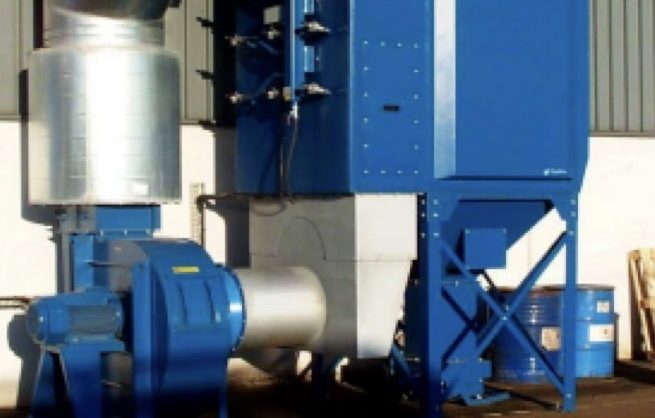
A dust extraction fan adapted to your dust types
Wood, metals, flour, mineral powders, fumes: each type of dust imposes its own constraints. We choose the impeller type according to the fan’s position in the installation: radial blades, robust and less sensitive to fouling, for dust-laden air; backward-inclined blades, high-efficiency, for filtered air. Materials and anti-wear protections are defined according to the abrasiveness, temperature, and humidity of the gases.
Dust Extraction and ATEX
Many dusts are combustible: wood, flour, sugar, fine metal powders. The areas concerned are then classified as ATEX, and the dust extraction fan must comply with Directive 2014/34/EU, in the category corresponding to the zoning defined by the operator. We supply ATEX fans, with a construction limiting the risk of sparks and complete earthing.
Stable flow, controlled consumption
The pressure drop of a filter increases as the bags or cartridges become clogged. With a frequency inverter, the fan maintains a constant suction flow rate and consumes only the necessary energy.
Frequently Asked Questions
Should the fan be placed before or after the filter?
After the filter, the fan handles clean air: it can be optimized for efficiency and experiences little wear. Before the filter, it is exposed to dust and must be designed to resist abrasion. The choice depends on the process, the nature of the dust, and the location.
What information is needed to size a dust extraction fan?
The air flow rate to be extracted, the pressure drop of the network and the filter, the nature and concentration of the dusts, the gas temperature, and any ATEX classification.
Can you renovate a worn dust extraction fan?
Yes: replacement or recharging of the impeller, wear plates, rebalancing. Discover our industrial fan renovation services.
A complete dust extraction system
MECAVENT sizes and supplies the entire chain: capture, welded ducts, dust collector/en/industrial-dust-collectors-and-ductwork/, fan, silencer, and control. Discover our turnkey solutions.